



Understanding DAO Governance Models: The Future of Decentralized Decision Making
In recent years, decentralized autonomous organizations (DAOs) have emerged as a revolutionary model for managing digital assets and community-driven projects. According to a report, the DAO market is projected to grow by over 50% in the next year. This rapid expansion raises critical questions about governance structures that can sustain this growth. Today, we dive deep into the world of DAO governance models, exploring what makes them effective, the potential risks involved, and how they can be optimized for future success.
What is a DAO?
A DAO, or decentralized autonomous organization, is an organization represented by rules encoded as a computer program that is transparent, controlled by organization members and not influenced by a central government. These organizations are built on blockchain technology, offering an unprecedented level of autonomy and democratization. The underlying principle of DAOs is that they enable collective decision-making in a transparent manner while removing human biases from the governance process.
The Importance of Governance in DAOs
A well-defined governance model can be likened to the framework of laws in a democratic nation. Governance in a DAO dictates how decisions are made, who has the power to influence these decisions, and how resources are allocated. More importantly, it helps ensure accountability among members, fostering trust within the community. As more users enter the space, especially in places like Vietnam where crypto adoption is rapidly rising—Vietnam’s crypto user growth rate is approximately 30% annually—the need for robust DAO governance becomes increasingly critical.
Common DAO Governance Models
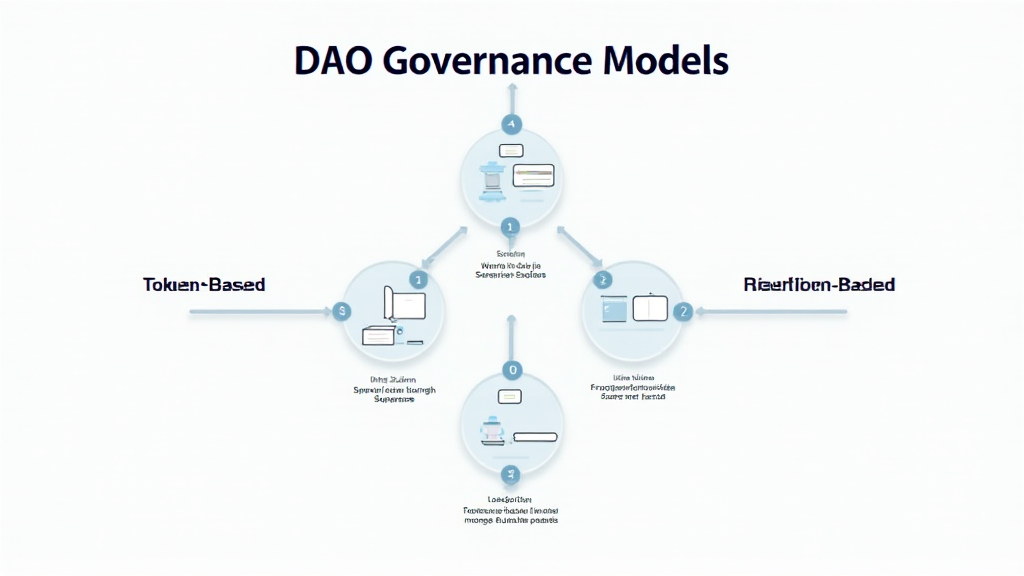
There are several prevalent governance models in DAOs, each with its strengths and weaknesses. Understanding these models can help organizations select the best approach for their community.
1. Token-Based Governance
- Description: This model utilizes tokens, typically acquired through purchases or contributions, as voting power in the decision-making process.
- Example: MakerDAO, which allows MKR token holders to vote on key decisions regarding the stablecoin DAI.
- Pros: Simple to understand and implement; aligns incentives as token holders benefit directly from the success of the protocol.
- Cons: May lead to centralization if a few large holders gain disproportionate voting power.
2. Quadratic Voting
- Description: This model allows members to allocate votes based on the value they place on various proposals, with costs increasing quadratically to prevent dominance.
- Example: Used in some DAO voting processes to reflect the preferences of the entire community.
- Pros: Provides a more equitable distribution of power; mitigates influence from wealthier stakeholders.
- Cons: Can be complex to implement and may confuse members who are not familiar with the concept.
3. Reputation-Based Governance
- Description: In this model, voting power is derived from a member’s reputation within the community, often built up through contributions and active participation.
- Example: MolochDAO, which emphasizes collective effort and accountability.
- Pros: Encourages positive contributions and deepens community ties; reduces the influence of speculators.
- Cons: Hard to measure and quantify reputation accurately; could lead to exclusion of newer or less active members.
Challenges and Considerations for DAO Governance
While DAO governance models have shown promise, several challenges must be navigated to ensure their success.
Consensus Mechanism Vulnerabilities
Like a bank vault for digital assets, a DAO must choose a secure consensus mechanism. Vulnerabilities can lead to governance attacks where malicious actors gain control over key decisions. To mitigate this, rigorous smart contract audits must be conducted.
User Engagement and Participation
In robust governance models, participation is vital. Lower engagement can result in inadequate decision-making, affecting outcomes. Community incentives, like rewards for active participants, can encourage broader involvement.
Future Trends in DAO Governance
As DAOs continue to evolve, certain trends are becoming apparent that will shape their governance models moving forward.
- Integration of AI: Leveraging artificial intelligence to assist in decision-making processes could enhance efficiency.
- Hybrid Models: A blend of various governance models may emerge to create more robust frameworks that address the limitations of individual models.
- Global Participation: As seen in emerging markets such as Vietnam, a more global participant base will require governance models to be adaptable and inclusive.
Optimizing DAO Governance for Success
To truly realize the potential of DAOs, organizations must continually optimize governance structures. Here are some strategies:
- Regular Reviews: Conduct periodic assessments of governance effectiveness to identify areas for improvement.
- Community Feedback: Create channels for members to voice their opinions on governance issues, encouraging a more democratic environment.
- Education and Resources: Providing resources and support for members to understand governance processes and how they can participate can increase engagement.
Conclusion: The Path Forward for DAO Governance Models
The evolution of DAO governance models reflects the changing landscape of blockchain technology and community-driven initiatives. As these organizations gain traction and attract users worldwide, especially in burgeoning markets like Vietnam, optimizing governance structures will be key to sustaining growth and fostering trust. By balancing power dynamics and incentivizing participation, DAOs can reach their full potential as democratic frameworks guiding the future of decentralized governance. Let’s embrace the challenge and navigate this exciting journey together!
For those looking to engage with groundbreaking DAO initiatives, delve into projects like magacatcoin, which is leading the way in innovative governance. Don’t miss out on this evolving space!
Author: Dr. Alex Thompson, a blockchain consultant and researcher, has published over 20 papers in the field of decentralized technologies and played a pivotal role in auditing several high-profile projects.


