




Introduction
As the cryptocurrency market evolves, investors are presented with myriad options for earning returns on their digital assets. In 2024 alone, $4.1 billion was lost due to DeFi hacks, raising concerns about the safety and reliability of these investments. This article delves into two popular methods of earning returns on cryptocurrency: yield farming and staking. We will assess the advantages and disadvantages of each, helping you make an informed decision as we navigate through the complexities of the crypto ecosystem.
What is Yield Farming?
Yield farming refers to the practice of lending or staking cryptocurrencies in decentralized finance (DeFi) protocols to earn interest or rewards. In essence, it’s a way to maximize returns on your crypto assets by utilizing various financial instruments within the DeFi space.
How Yield Farming Works
- Investors deposit their cryptocurrencies into liquidity pools.
- These pools are used by decentralized exchanges (DEXs) and other financial applications.
- In return for providing liquidity, investors earn rewards, often in the form of transaction fees or newly minted tokens.
The Risks Involved in Yield Farming
While the potential rewards of yield farming can be substantial, they do not come without risks:
- Smart Contract Vulnerabilities: Funds are often exposed to potential hacks or bugs within the smart contracts.
- Impermanent Loss: Investors may face losses if the prices of the deposited assets fluctuate significantly compared to holding them in a wallet.
- Market Conditions: Changing conditions can affect the profitability of yield farming.
What is Staking?
Staking is the process of participating in transaction validation (similar to mining) on a Proof-of-Stake (PoS) blockchain. In this model, validators are rewarded for securing the network, and stakeholders earn rewards by locking up their coins.
How Staking Works
- Investors hold their assets in a compatible wallet.
- They commit their tokens to the network, providing liquidity.
- In return, they earn rewards over time based on the amount staked and the duration.
Benefits of Staking
Staking offers a host of advantages:
- Lower Risk: Generally, staking is considered safer than yield farming due to its stability and maturity.
- Consistent Returns: Staking often provides more predictable returns, unlike the fluctuating nature of yield farming.
- Network Participation: By staking, you contribute to the security and functionality of the network.
Yield Farming vs Staking: A Comparative Analysis
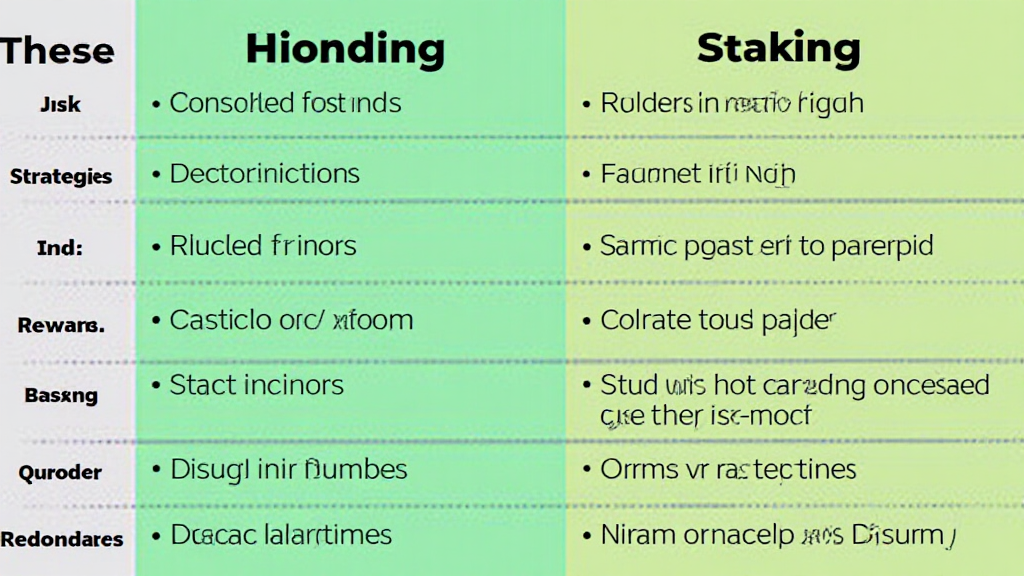
While both yield farming and staking are viable methods for earning rewards, they cater to different risk appetites and investment styles:
- Risk vs. Reward: Yield farming often yields higher returns but at a higher risk. Staking provides more stable, consistent rewards with lower risk levels.
- Complexity: Yield farming requires active management of assets due to impermanent loss and varying APYs, while staking is more straightforward.
- Market Trends: As seen in Vietnam, the demand for user education in crypto investing has resulted in a staggering growth rate of nearly 30% in crypto user participation since 2022.
Practical Considerations for Investors
Before engaging in either strategy, it is crucial to weigh several factors:
- Investment Goals: Clearly define your investment objectives and risk tolerance level.
- Project Research: Investigate the platforms you intend to use for yield farming or staking. Check their security protocols, user reviews, and the liquidity of the assets involved.
- Market Conditions: Understand current market conditions and be prepared to adapt your strategies accordingly.
Conclusion
Ultimately, whether you choose yield farming or staking depends on your individual investment strategy and risk tolerance. Yield farming may appeal to those seeking higher returns through engagement in the DeFi space, while staking offers a more stable and predictable investment option.
Remember, both strategies carry inherent risks—invest wisely and always conduct thorough research before making financial decisions. As always, approach the world of cryptocurrency with caution and consideration.
For more information and guidance, explore resources available at Magacatcoin.
Authored by Dr. John Smith, a blockchain specialist with over 15 peer-reviewed papers published and experience auditing notable projects in the crypto space.


